FNOL Automation: How to Cut Claims Intake Time and Errors

First Notice of Loss (FNOL) is the critical first step in the insurance claims process - the moment a policyholder notifies their insurer of an event, such as an accident or theft, that may lead to a claim. This stage sets the tone for the entire claims experience, shaping both operational efficiency and customer satisfaction.
In an era of instant expectations, the transition from manual FNOL to FNOL automation has become one of the clearest ways for insurers to compete.
By automating intake, insurers can significantly reduce processing times and minimize errors. Automated FNOL processing carries clean, validated data straight into core systems through capabilities like Claims Automation and Straight-Through Processing (STP), driving operational efficiency from the very first touch. This guide covers what FNOL is and why it matters, the challenges of traditional intake, how automation works end to end, the key features and benefits, what to measure, the compliance picture, and where the technology is heading.
What Is FNOL and Why Is It Important in Claims Processing?
The role of FNOL in the claims lifecycle is pivotal, because it directly determines how a claim is managed from inception to resolution. An effective FNOL process ensures all necessary information is gathered promptly and accurately, setting the tone for everything that follows. Insurers use this initial information to assess liability, initiate investigations, and determine coverage - which is why FNOL is foundational to the entire claims operation.
When that first step is weak, the consequences ripple downstream. Common problems at FNOL include data entry errors, communication delays, and insufficient information gathering. Inaccurate information captured here leads to complications later, often resulting in dissatisfied customers and higher operational costs. Delays frustrate policyholders, while insurers absorb the cost of inefficiencies and disputes.
What Challenges Do Insurers Face with Traditional FNOL Processes?
Manual Workflows and Their Inefficiencies
Traditional FNOL relies on manual workflows that are slow and inconsistent. When a customer reports a claim, details are typically taken over the phone, keyed into a system by hand, and routed through multiple departments. These fragmented steps cause delays as information is lost in translation between parties, dragging out the claims cycle. Every human touchpoint also invites miscommunication and data-entry mistakes, and as claim complexity grows, the burden on adjusters becomes unsustainable - creating bottlenecks that leave customers waiting.
Common Bottlenecks in FNOL Reporting
The biggest bottlenecks sit in verification and data collection. Gathering and organizing information from multiple sources - customer statements, police reports, third-party evidence - is cumbersome and time-consuming. Worse, if FNOL doesn't trigger immediate action, claims can get lost in paperwork and inter-departmental handoffs, compounding the delay. This is exactly why insurers need streamlined processes with immediate access to information.
The Impact of Delays on Customer Satisfaction
In insurance, time equals trust. Delays during FNOL generate frustration, negative feedback, and reduced loyalty. Satisfaction data consistently shows a clear correlation between the speed of claim resolution and how customers rate their insurer. When policyholders feel they have to fight to get a claim processed, their perception of the brand falls. FNOL automation directly counters this by enabling instant acknowledgment and proactive status communication.
Risk of Human Error and Its Consequences
Human error is inevitable in any manual process, and in FNOL the stakes are high. A misrecorded policy number, an incorrect claim amount, or missing documentation can trigger denials or prolonged investigations. These setbacks frustrate customers and expose insurers to financial loss and reputational harm. Reducing human involvement through automation removes touchpoints where errors creep in, creating a cleaner path from claim initiation to resolution.
What Is FNOL Automation?
FNOL automation is the use of software, AI, and connected workflows to handle claims intake without manual intervention. Instead of a representative answering a call, typing notes, looking up a policy, and opening a file by hand, an automated system captures the loss details across channels, validates them in real time, confirms coverage, and routes the claim to the right adjuster often before the customer hangs up.
It does not remove human judgment. It removes the low-value data entry that buries adjusters, freeing them to focus on complex, high-value, and sensitive claims where expertise actually matters.
How Does Automated FNOL Processing Work?
Automated FNOL processing connects four moving parts: the intake channel, the claims management system, the policy administration system, and the communication layer. Here is how a modern automated FNOL workflow runs, stage by stage.
Stage 1 - Omnichannel Loss Reporting
Policyholders report a loss through whatever channel is easiest — mobile app, web form, email, SMS, or an AI-assisted phone line — available 24/7. Guided intake captures photos, documents, and a plain-language description of what happened, so the data is complete from the first touch.
Stage 2 - Intelligent Data Capture and Validation
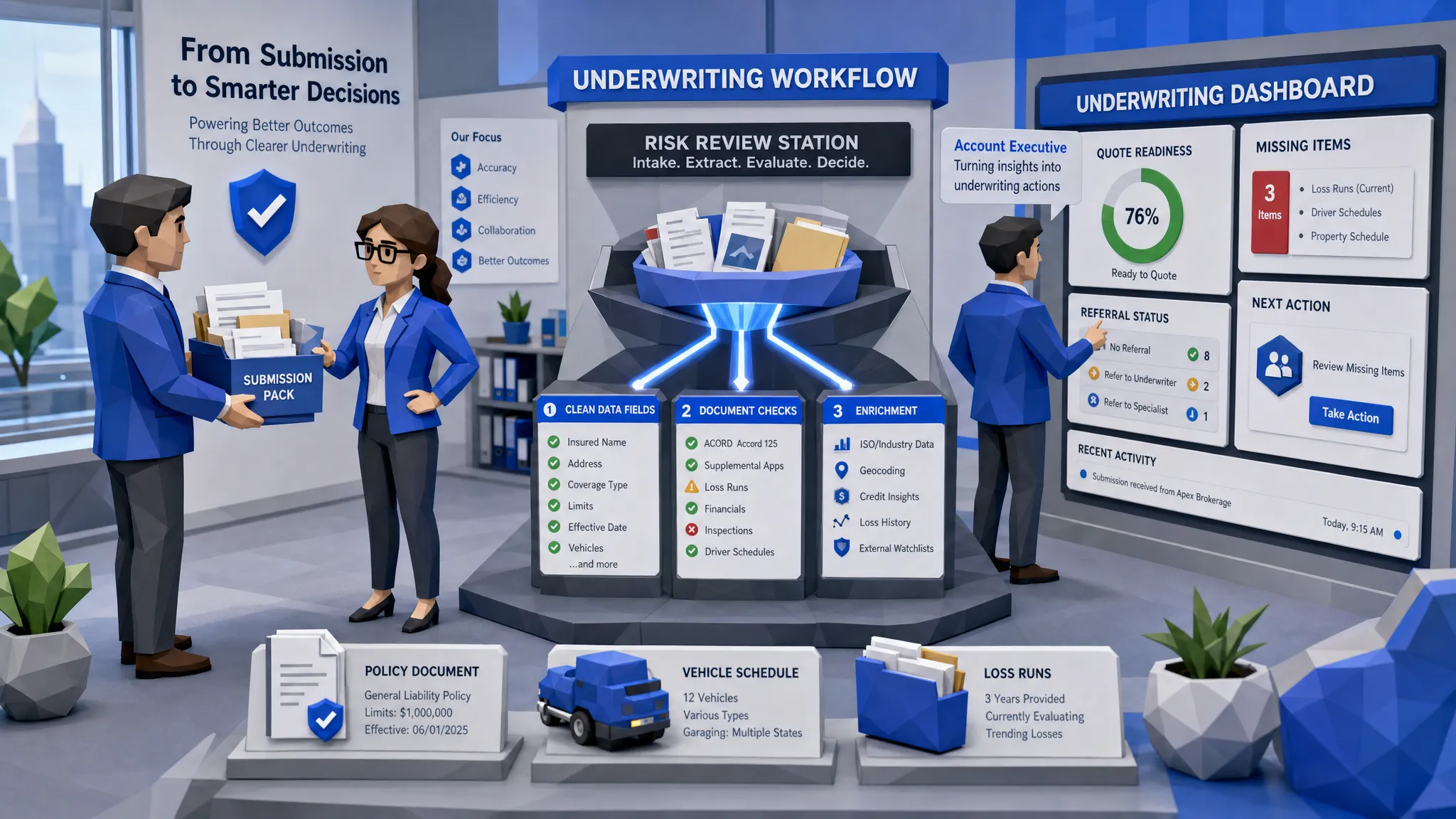
The system extracts structured data from unstructured inputs using AI, OCR, and natural language processing - reading scanned forms, ACORD documents, ID cards, and free-text narratives. It pre-fills known policy details, validates required fields in real time, and prompts the claimant for anything missing before the claim is ever submitted.
Stage 3 - Coverage Verification
Coverage is confirmed in seconds against the policy administration system, rather than hours or days later. Anomalies and policy discrepancies are flagged automatically, so adjusters never chase down basic status.
Stage 4 - Triage and Routing
Rules sort each claim by line of business, severity, location, and required expertise, then assign it to the right handler the moment intake completes. Urgent claims jump the queue instead of waiting in it.
Stage 5 - Communication and Handoff
The policyholder receives an instant acknowledgment and milestone updates through their preferred channel, and the structured claim record flows straight into the core system closing the loop that so often goes dark after the first report.
FNOL Process Flow: Manual vs. Automated
The policyholder receives an instant acknowledgment and milestone updates through their preferred channel, while the structured claim record flows straight into the core system - closing the loop that so often goes dark after the first report.
What Are the Benefits of FNOL Automation?
Faster cycle times. Automated triage and assignment can cut the gap between first notice and first adjuster contact from days to minutes, shortening the whole claims journey.
Fewer errors. Eliminating manual data entry removes the miskeyed policy numbers, dates, and incident details that cause expensive rework and compliance risk downstream.
Lower loss adjustment expense. Less administrative handling, fewer reworks, and faster resolution reduce the cost of every claim.
Higher adjuster productivity. When people stop doing intake and lookups, they spend their time on investigation, negotiation, and customer trust — work that improves outcomes and reduces costly turnover.
Better customer experience. Claims are the moment of truth for an insurance relationship. Fast, transparent, responsive handling drives renewals; silence drives churn.
CAT-event resilience. Automated intake scales through catastrophe surges without the capacity ceiling tied to staffing levels.
How Can Claims Automation Streamline FNOL?
Definition and Benefits of Claims Automation
Claims automation is the use of technology to process claims with minimal human intervention — capturing, managing, and analyzing data far more efficiently than manual processes can. The benefits include greater speed, accuracy, and cost savings, plus a better customer experience from quicker responses. Automated intake ensures incoming claims are categorized and routed to the right parties without unnecessary delay, while claimants receive real-time updates.
The Role of AI, ML, and NLP in Automating FNOL
Several technologies drive FNOL automation. Artificial Intelligence streamlines data collection and analysis so claims move faster. Machine Learning identifies patterns in claims data, strengthening risk assessment and fraud detection. Natural Language Processing lets systems understand and interpret human language, smoothing communication between insurer and policyholder. AI-enabled chatbots and virtual assistants can collect initial claim information automatically, freeing human adjusters and cutting wait times, while predictive insights from historical data help flag potential fraud early and prioritize urgent claims.
Integrating Automated Systems with Existing Infrastructure
Seamless integration with existing infrastructure is essential. Many insurers run legacy systems that don't easily accommodate new technology, but smart data integration lets modern automation work alongside them. Using APIs and middleware, insurers can connect automated FNOL to claims management platforms, CRM systems, and data repositories — so data flows smoothly and teams act faster.
Real-Time Data Processing and Decision-Making
A standout benefit of automated FNOL is real-time data processing. Where traditional systems suffer lag that slows decisions, automation gives insurers up-to-date data to act on immediately. That means instant feedback to customers, adjusters, and stakeholders about claim status — improving communication and building trust throughout the journey.
What Are the Key Features of an Effective Automated FNOL System?
User-Friendly Interfaces for Customers and Adjusters
An effective system must be intuitive for both sides. A clean interface lets policyholders initiate claims easily and gives adjusters the tools to manage them efficiently. Design should prioritize clarity, accessibility, and responsiveness, and well-built dashboards should summarize claim statuses and next actions to sharpen decision-making.
Multi-Channel Reporting Capabilities
Modern customers communicate across mobile apps, web portals, and social platforms. An effective FNOL system supports multi-channel reporting so customers can file through their channel of choice, broadening reach and improving experience. Voice-to-text and app integration simplify reporting further, ensuring no customer is left behind.
The Importance of Real-Time Communication Tools
Real-time communication is vital during FNOL. Chat functionality, notifications, and status updates keep claimants informed, reducing uncertainty and building confidence. These tools also let insurers collaborate closely with adjusters, giving them immediate access to critical information that speeds resolution.
Advanced Data Analytics for Predictive Insights
Analytics turn intake into foresight. A system with advanced analytics continuously analyzes incoming claim data to identify trends, detect anomalies, assess risk, and predict outcomes — helping insurers catch fraudulent claims and estimate resolution times or escalation risk. This lets teams allocate resources proactively rather than reactively.
What Are the Benefits of FNOL Automation?
Faster cycle times. Automated triage and assignment cut the gap between first notice and first adjuster contact from days to minutes, shortening the entire claims journey.
Fewer errors. Eliminating manual data entry removes the miskeyed policy numbers, dates, and incident details that cause expensive rework and compliance risk downstream. Reliable data also fosters trust, since accurate information leads to better-informed claim decisions.
Lower loss adjustment expense. Less administrative handling, fewer reworks, and faster resolution reduce the cost of every claim.
Higher adjuster productivity. Freed from intake and lookups, adjusters spend their time on investigation, negotiation, and customer trust — work that improves outcomes and reduces costly turnover.
Better customer experience. Quicker responses and transparent, proactive communication raise satisfaction and drive renewals; silence drives churn.
CAT-event resilience. Automated intake scales through catastrophe surges without the capacity ceiling tied to staffing levels.
What Role Does Data Play in FNOL Automation?
Quality data is the foundation of successful FNOL automation. Insurers must prioritize collecting and analyzing accurate data to inform automated processes; a data-driven approach lets them fine-tune operations and sharpen decision-making. Integrating big data offers further advantages — leveraging large volumes of information helps insurers anticipate trends, assess risk more precisely, and tailor service based on the insights generated. In short, the better the data discipline, the more value automation returns.
How Does FNOL Automation Help MGAs and Brokers?
Automation isn't only a carrier story. For MGAs and brokers, the value shows up as data quality and consistency at the point of intake.
Ensuring FNOL Accuracy and Completeness for MGAs
Automated validation checks every required field at submission and flags incomplete or inconsistent information before the claim reaches an adjuster — so MGAs pass carriers clean, complete FNOLs instead of chasing missing details later.
Helping Regional Brokers Submit Cleaner FNOL to Carrier Partners
Guided, structured intake means brokers capture the same complete data set every time. That standardization lets regional brokers submit cleaner FNOL information to their carrier partners, reducing back-and-forth and speeding acceptance.
Standardizing FNOL Intake Across Multiple Claims Teams
For larger MGAs running several teams, rules-based intake enforces one consistent process across all of them, removing the variation that creates downstream rework.
Do Automated FNOL Summaries Include an Audit Trail?
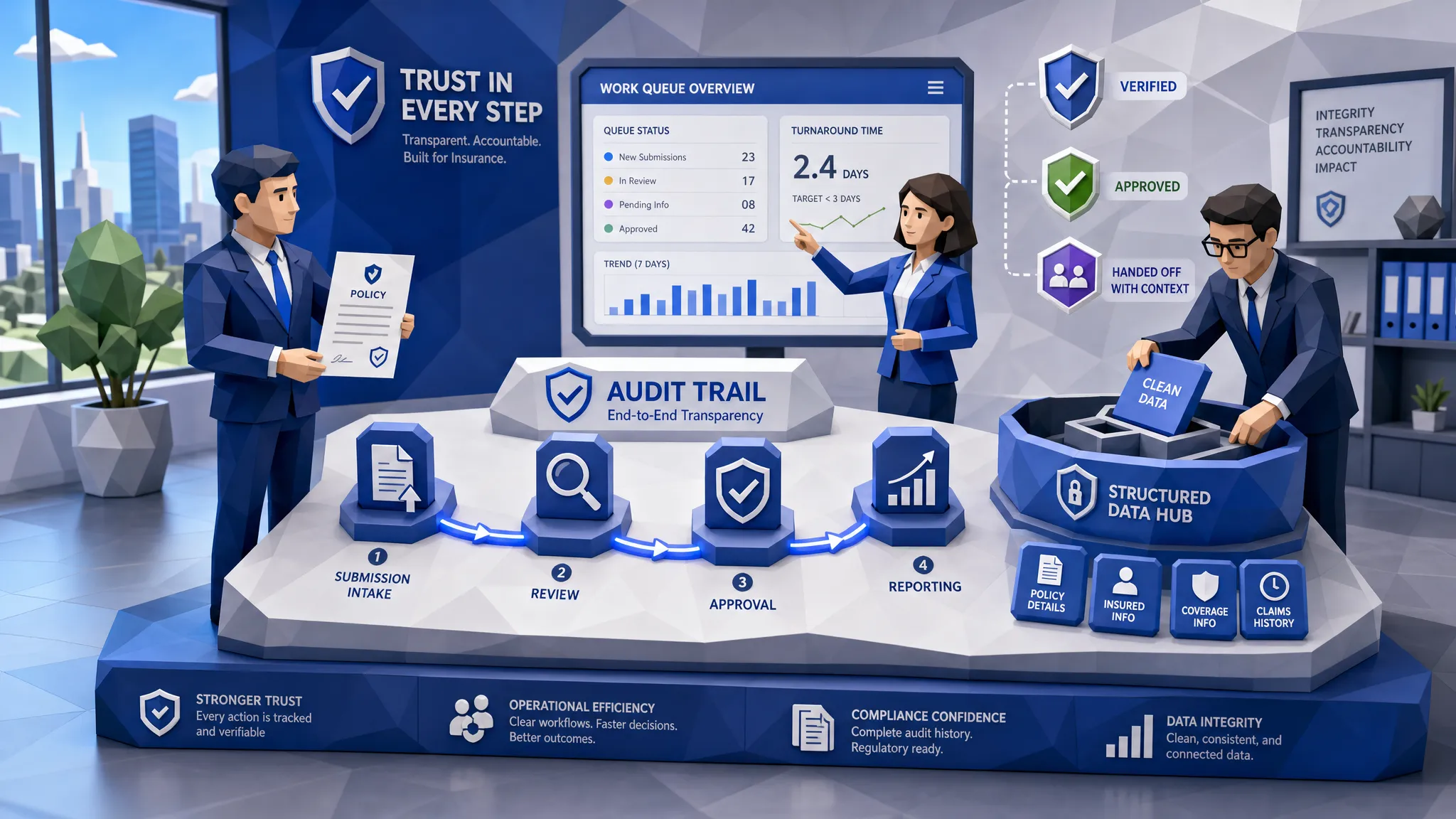
Yes. Modern automated FNOL processing generates a complete, timestamped audit trail for every claim — recording what data was captured, which validations ran, how the claim was routed, and which communications were sent. This auditability is essential for regulated carriers and for any team that needs to demonstrate compliance, defend a decision, or reconstruct exactly how a claim was handled. Automated FNOL summary tools turn intake into a clean, reviewable record rather than a black box.
Can You Automate FNOL with Low IT Requirements?
Yes. Cloud-based FNOL automation can deploy with minimal IT involvement and integrate with legacy policy and claims systems through APIs, rather than requiring a full core-system overhaul. For small MGAs in particular, this means modern automated FNOL processing is achievable without a large engineering team or a long implementation — making low-IT, fast-deploy options a realistic path to faster intake.
What Metrics Should Insurers Track After Implementing FNOL Automation?
Key Performance Indicators (KPIs) for FNOL Efficiency
Once automation is live, track performance to drive continuous improvement. Core KPIs include average time to acknowledge a claim, time from FNOL receipt to resolution, and claims processed per adjuster. These reveal how well the system is working and where it needs tuning.
Customer Satisfaction Scores and Feedback Analysis
Beyond operational metrics, measure satisfaction after automation. Surveys and direct feedback clarify customer perceptions and expectations, while Net Promoter Score (NPS) and Customer Satisfaction (CSAT) offer actionable signals on service quality.
Reduction in Claims Processing Time and Costs
Track the reduction in overall processing time and associated costs. Analyzing claims duration and expense before and after automation demonstrates the tangible payoff and justifies further investment. Add straight-through-processing rate and data error/rework rate to round out the picture.
How Do Compliance and Security Factors Affect FNOL Automation?
Understanding Regulatory Compliance for Automated Systems
Automation must adhere to the regulations governing data handling and protection. Insurers need to keep current with legislation to avoid fines or legal exposure, design systems with compliance built in from the start, and run regular audits to surface and close any gaps.
Ensuring Data Security and Privacy in FNOL Automation
Given the sensitivity of claims data, security is paramount. Robust measures — encryption, firewalls, role-based access, and secure protocols — protect customer data against breaches and unauthorized access. A visible commitment to privacy, backed by clear policies and transparent communication, reinforces consumer trust.
Adopting Best Practices for Ethical AI Use in Claims
Automated decision-making raises ethical considerations. Insurers should keep claims systems transparent and accountable, with guidelines for data usage, algorithm explainability, and active attention to potential bias. An ethical framework protects policyholders and strengthens insurer credibility.
What Challenges Might Insurers Face When Implementing FNOL Automation?
Despite the benefits, adoption is fundamentally change management. Expect staff resistance — employees used to manual processes may hesitate to embrace new tools — and integration complexity when connecting automation to legacy systems. Data privacy and security obligations add another layer: insurers must stay compliant while implementing strong safeguards. There's also a realistic ceiling on full automation; edge cases, relationship judgment, and regulatory oversight mean not every claim can or should be straight-through. The teams that succeed treat automation as augmentation — automate the routine, escalate the complex, invest in training, and upgrade legacy systems deliberately.
What Are the Future Trends in FNOL Automation and Claims Processing?
Machine Learning and Predictive Modeling
The convergence of machine learning with FNOL automation is accelerating. By analyzing historical claims data, insurers can predict outcomes, assess risk accurately, and address issues before they escalate — allocating resources efficiently and intervening earlier on high-risk claims.
Sensor- and Telematics-Triggered FNOL
The next wave moves FNOL from a form a customer fills out to an event the data reports on its own. Telematics, IoT sensors, and connected property devices increasingly trigger FNOL automatically — a connected vehicle transmitting collision data, or a smart sensor flagging water intrusion before the homeowner even notices.
Enhanced Customer Self-Service Options
Expect continued investment in self-service: mobile platforms that let policyholders manage claims independently, video claim submissions, and 24/7 support through AI chatbots — meeting modern expectations for immediate, flexible interactions.
The Evolution of Insurance Technology
As the sector's technology matures, emerging tools — including blockchain, the Internet of Things, and augmented reality — will be woven into FNOL workflows, further optimizing efficiency. Insurers who stay ahead of these advances will be best positioned to navigate challenges and deepen customer relationships.
Conclusion
FNOL automation represents a transformative opportunity to improve efficiency and minimize errors across claims processing. By leveraging advanced technologies and streamlined workflows, insurers can reduce bottlenecks, cut the risk of human error, and build greater customer trust. The promise extends beyond efficiency — it's about how insurers evolve to meet modern expectations for speed and transparency. As automated FNOL processing becomes the standard rather than the exception, the organizations that embrace it now will set themselves apart.
Frequently Asked Questions
What does FNOL stand for?
FNOL stands for First Notice of Loss — the first report a policyholder makes to their insurer after an incident such as a car accident, property damage, or theft. It formally starts the claims process.
What is the difference between FNOL automation and automated FNOL processing?
FNOL automation is the broad practice of digitizing claims intake. Automated FNOL processing refers specifically to the system that captures, validates, and moves that intake data into core claims systems without manual rekeying. In practice they work together as one continuous, hands-off intake workflow.
How much time does FNOL automation save?
Savings vary by carrier and claim type, but automated intake commonly reduces per-claim intake from 20–30 minutes to a few minutes and cuts FNOL-to-first-contact time from days to minutes.
Does FNOL automation replace adjusters?
No. It removes manual data entry and routing so adjusters can focus on investigation, negotiation, and complex claims. Automation augments the team rather than replacing it.
Do automated FNOL summaries include an audit trail?
Yes. Automated FNOL processing generates a complete, timestamped audit trail for every claim — what data was captured, which validations ran, how it was routed, and which communications were sent — supporting compliance and review.
Ready to Take the Next Step?
Inaza helps carriers, MGAs, and brokers turn FNOL from a bottleneck into a competitive advantage with AI-driven, automated FNOL processing that captures clean data, verifies coverage, and routes claims in real time. Contact us to see how Inaza automates FNO.